

Views: 25 Author: Site Editor Publish Time: 2025-12-22 Origin: Site
When sourcing textiles for residential homes, the priority is aesthetics. But when sourcing for public spaces—such as hotels, schools, hospitals, or theaters—the priority shifts to one non-negotiable factor: Safety.
Project managers and contractors often face a maze of fire safety codes. What is NFPA 701? Is it the same as B1? What happens if the curtains fail an inspection?
At UVAN, we specialize in manufacturing contract-grade textiles. We wrote this guide to help you navigate these regulations and ensure your project passes the Fire Marshal's inspection with flying colors.
Different regions use different testing methods. Using the wrong certification can lead to costly rejections.
Where it applies: USA, Canada, and many international American-brand hotels.
The Test: It measures how a fabric reacts when exposed to an open flame. The fabric must self-extinguish within 2 seconds after the flame is removed, and the charred residue must not exceed a certain weight.
Key Takeaway: If your project is in the US, this is the gold standard.
Where it applies: Germany, most of Europe, and parts of Asia.
The Test: This is the "Brandschacht" test. It classifies materials as "Schwerentflammbar" (difficult to ignite).
Key Takeaway: It is widely accepted globally as a sign of high-safety material, often used in exhibitions and events.
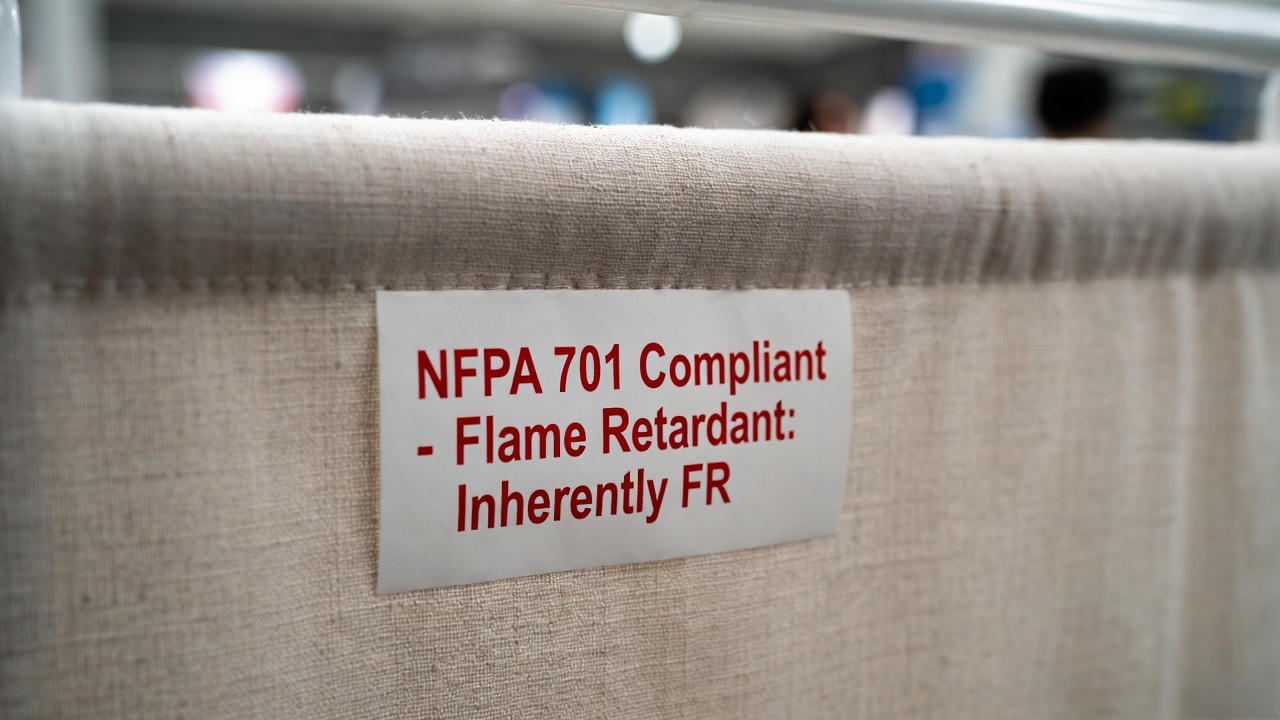
Not all flame retardant (FR) fabrics are created equal. The difference lies in how they become fire-resistant.
How it works: The flame-retardant properties are built into the molecular structure of the polyester fiber itself.
Durability: Permanent. You can wash it 100 times, and it will still pass the NFPA 701 test.
Best For: Hospitals and Hotels where curtains are laundered frequently for hygiene.
How it works: Standard fabric is soaked in a flame-retardant chemical solution after weaving.
Durability: Temporary. The chemical protection may wash off after 5–15 laundry cycles (dry cleaning is recommended).
Best For: Theaters and Event Drapes where curtains are rarely washed, or for budget-sensitive projects.
We don't just supply fabric; we supply compliance.
Certified Testing: We work with international labs like SGS and Intertek. We can provide fresh test reports under your company's name for project bidding.
Digital Printing on FR: Most factories cannot print on FR fabrics because the ink interferes with the chemicals. UVAN has solved this. We can print vibrant, custom designs on IFR fabrics without compromising safety standards.
Imagine a pediatric hospital curtain with colorful zoo animals that is also 100% fire-safe.
In contract projects, liability is a serious issue. Using non-compliant curtains is a risk you cannot afford to take.
Whether you need cost-effective treated fabrics for a banquet hall or permanent IFR fabrics for a school dormitory, UVAN has the expertise and the certifications to support your bid.
Working on a project?[Contact UVAN] today. Send us your project specs, and we will recommend the compliant fabric and provide the necessary test reports.


